

How To Clean And Oil A Vr 60
The VR web is here

Over the past several years, the technologies underlying the modernistic internet take begun to mature. The web has gone through a 2d renaissance, resulting in the unprecedented growth of more intelligent experiences that can be ported across a growing number of devices.
- The UX of VR
The browser, more than ever, enables an increasing number of innovative scenarios to come to life. An emerging community of developers have begun to use web technologies to create connected scenarios for a growing field in calculating: the recently reborn virtual reality industry.
Powerful platform
Graphics and networking technologies have seen dramatic increases in performance on desktop and mobile devices, and VR has been waiting. Over the past three years, web technologists around the world have been preparing for commercial VR headsets. The evolution of new libraries, additional features in web browsers, and entirely new definitions for what a website tin can be have all contributed to the birth of a vibrant and powerful platform for immersive displays.
In an increasingly continued world, in that location are a number of advantages that browser-based VR provides over the traditional desktop or mobile application development model. A single, central codebase reduces the overhead of managing builds and deploying to multiple platforms, and the open up nature of web applications removes the demand for app store approval and certification at release time. Developers can easily integrate existing tools, libraries and frameworks into their new VR sites, taking reward of the ecosystem that has evolved over the past decade effectually the mod web, while users benefit from ease of access and discovery.
The New VR
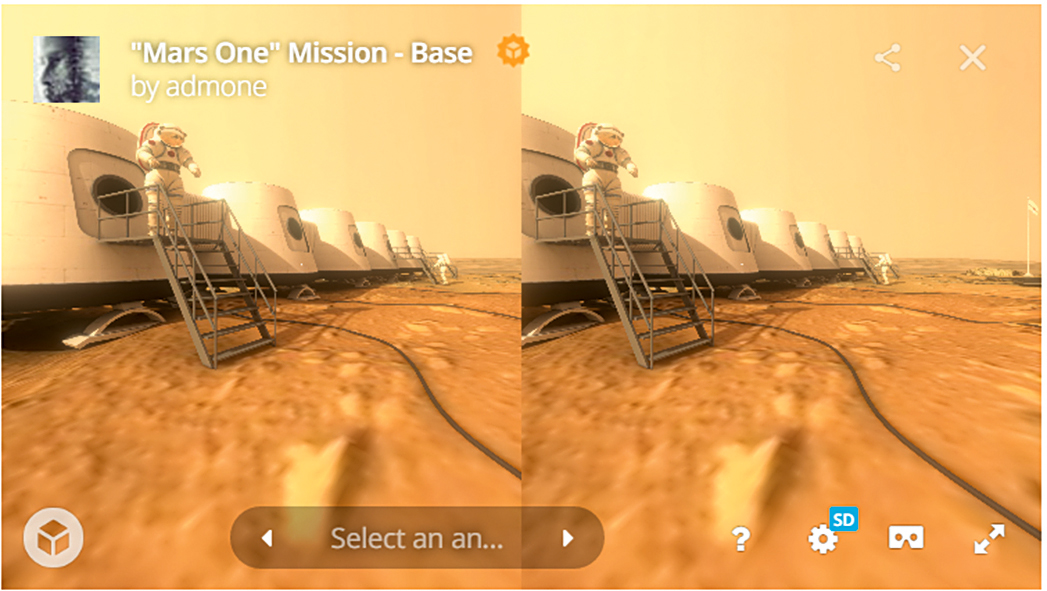
In the earliest days of the WebVR API, support was limited to beta builds of Firefox Nightly and Chromium, and browsers required additional plugins to run content built for immersive headsets. Developers faced meaning performance challenges to hit VR-gear up framerates that would friction match the 75-120fps benchmark offered by native apps, and a lack of visual development tools fabricated surround cosmos hard for new programmers.
Tools and technologies
Today, many of those hurdles have been addressed, and major engineering science companies are throwing their weight behind immersive technology. Google, Microsoft and Mozilla take all publicly announced their intent to bring back up for VR experiences to their desktop browsers in the coming months. Facebook has added native 360 photo and video playback to its site, and mobile browsers are able to seamlessly deed equally platforms for immersive websites. Oculus appear a Chromium-based, VR-first browser (code-named Carmel), at its recent developer briefing, and the industry continues to drive forrard at the intersection of the web and immersion.
New frameworks, languages and spider web-based editors have come up onto the scene to assistance in the creation of 3D content equally technologists turn more frequently to virtual and augmented technologies to create innovative new experiences. The web as we know it is changing.
In the by, browsers were only able to serve 2D sites constrained to a fixed layout. As the mobile revolution enabled more consistent admission to information, the spider web grew to prefer this, and progressive, responsive applications have led to increasingly powerful websites. Now, with the WebVR API, a website is no longer constrained to a device: it can exist an unabridged world. Let'due south footstep inside.
The WebVR API

The WebVR API, which hitting version i.0 in March 2022, is a browser specification that has been submitted to the W3C for consideration as a standard to define how VR devices will collaborate with web applications. It provides an implementation for browsers to communicate with attached VR hardware – or in the case of smartphones, read information about the state of the underlying device and pass it into 3D applications so information technology tin then be used to render WebGL scenes in existent time, stereoscopically, to the user.
VRDisplay
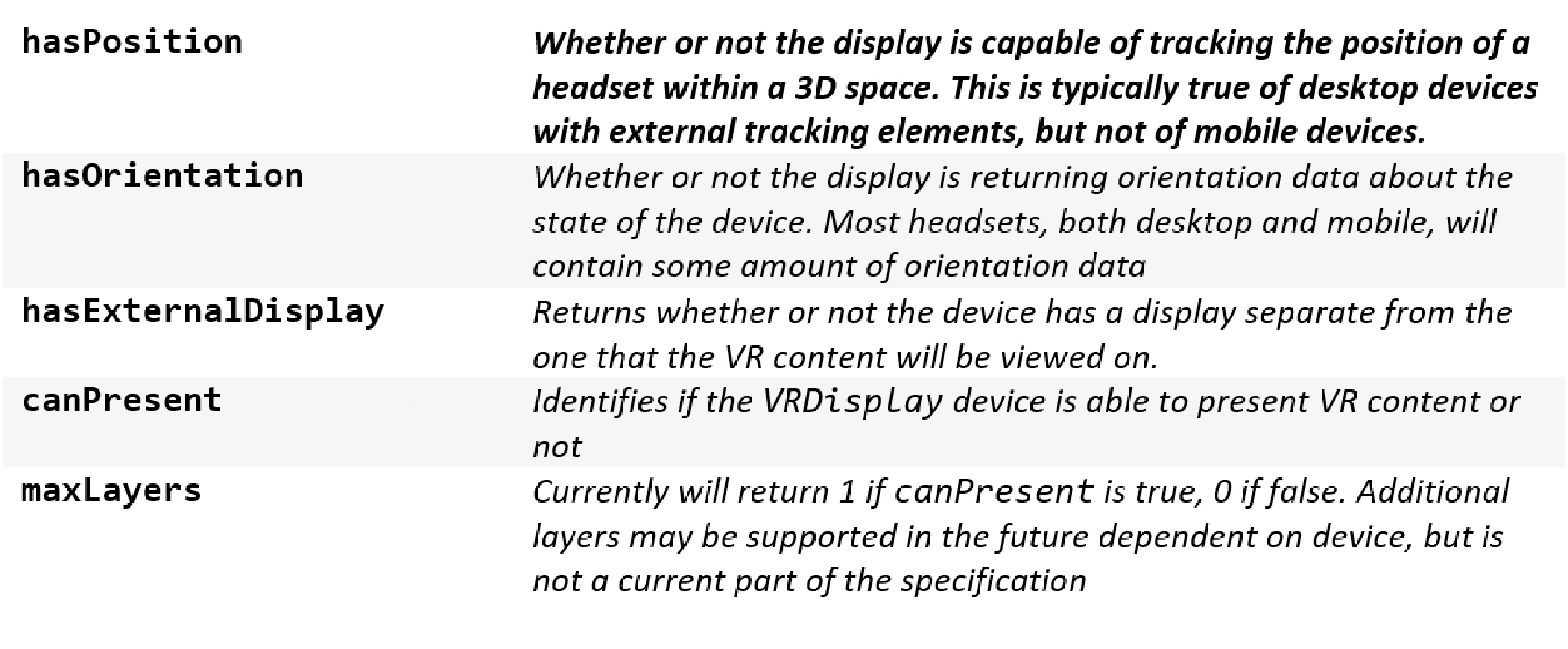
At the core of the WebVR API is the VRDisplay interface, which abstracts out the differences between desktop caput-mounted displays, mobile devices and additional peripheral devices, and represents them as a unmarried entity to the developer. These headsets tin can then be queried for their presentation and connection status, which allows the browser to detect the land for an application to use to make up one's mind how to return the scene.
The VRDisplay object also returns data about the state of the headset at whatever given time (such as when the user looks around) via a VRPose transform. This data tin can so be applied to a virtual camera within a 3D scene.
Mobile VR
With mobile VR experiences, the VRDisplay parameters are generated from the backdrop of the phone and the rotational tracking is washed via the internal gyroscopic sensors. Dedicated desktop headsets such every bit the Oculus Rift or HTC Vive will return data about the user's current viewing country, besides as information around the user's position gathered past the external sensors that rails where they are moving in the concrete 3D space. Optional peripheral devices, such equally game controllers or room-tracking base of operations stations, tin exist mapped out and surfaced to a web app through the VRDisplayCapabilities dictionary.
Gathering display info
Because of the multifariousness of parameters in display technologies, the WebVR API provides an interface through which to gather information about a given brandish device when a page connects, in society to allow the scene parameters to reflect that device's technical specifications. Developers working with the WebVR API directly should ensure they are properly querying for the different supported functionality betwixt devices, and program their application interactions accordingly.
When implementing functionality supported past the WebVR API, some traditional elements of a web graphics app are replaced by VR-specific function calls: window.requestAnimationFrame is replaced by a VR equivalent that updates at the frequency of the VR device (often 90Hz or college), and user agents may use predictive technologies to approximate frame information information.
The actual brandish data of a given headset is calculated through the VRLayer attributes, which specifies the right and left bounds of the display and handles the image distortion based on the parameters of the device.
Next folio: native applications, 3D graphics libraries and beyond JavaScript...
Related articles

Source: https://www.creativebloq.com/features/the-vr-web-is-here
Posted by: landermomp1940.blogspot.com
0 Response to "How To Clean And Oil A Vr 60"
Post a Comment